AI + Humans = The New Customer Service Model

Updated: Apr 15
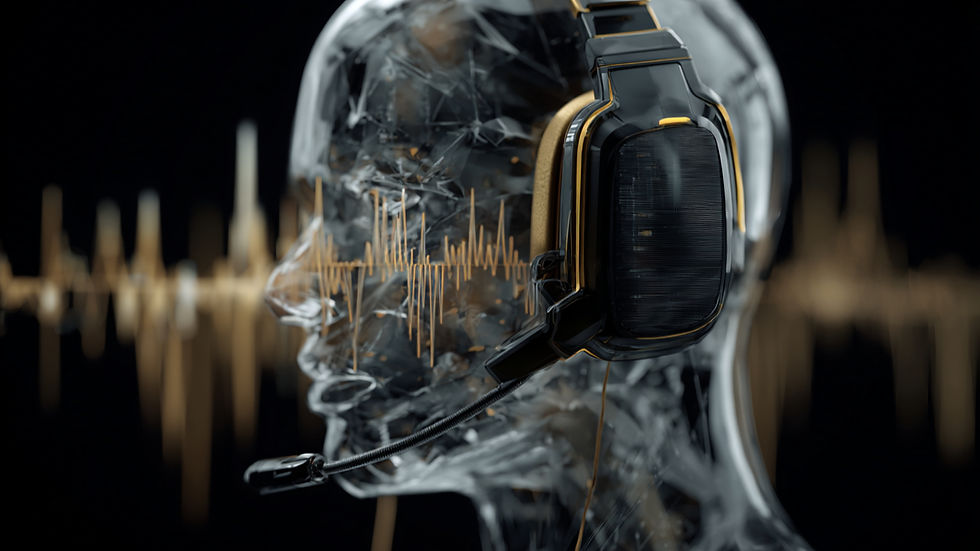
For years, the conversation around AI in customer service has been framed as a replacement story.
AI vs humans. Automation vs people. Efficiency vs experience.
But in practice, particularly in automotive, that narrative is proving to be wrong.
The real shift isn’t replacement. It’s reallocation.
And the companies getting this right are seeing measurable results.
The Hybrid Model Is Already Winning
Across customer service environments globally, a clear pattern is emerging:
AI can handle up to 80% of routine customer queries
Customer satisfaction can increase by as much as 20% when AI supports human agents
These aren’t marginal gains. They represent a fundamental redesign of how customer service operates.
Instead of overloading teams with repetitive tasks, AI absorbs the predictable, high-volume interactions, freeing humans to focus where they add the most value.
Why This Matters More in Automotive
Automotive customer service is uniquely complex:
High inbound call volumes
Time-sensitive service bookings
Customer frustration around delays or missed calls
Heavy reliance on dealership staff availability
Traditionally, this has meant:
Service advisors tied up on phones
Missed booking opportunities after hours
Inconsistent customer experiences across sites
This is exactly where the hybrid model delivers outsized impact.

Where AI Fits: Speed, Consistency, Availability
Solutions like Ask Harry are designed to handle the front line of dealership interactions:
Booking service appointments in real time
Answering common questions (pricing, availability, servicing intervals)
Managing after-hours enquiries
Handling overflow during peak periods
This is where AI thrives: structured, repeatable, high-frequency interactions.
It doesn’t get tired. It doesn’t miss calls. And it delivers the same experience every time.
“The real power of AI in customer service isn’t in replacing people, it’s in removing the repetitive load so humans can focus on what actually requires human evaluation. That’s where the biggest gains happen.” — Mike Farah
Where Humans Excel: Judgement, Empathy, Complexity
But not everything should be automated.
Customers still need people when:
A situation is complex or nuanced
There’s a complaint or escalation
Advice or reassurance is required
A relationship needs to be built or repaired
In the hybrid model, dealership teams are no longer acting as call handlers. They become problem-solvers and relationship managers.
That’s a far more valuable role for both the business and the employee.
The Real Shift: From Volume Handling to Value Creation
This is the most important insight:
The best-performing dealerships aren’t using AI to reduce headcount. They’re using it to increase capacity and improve quality simultaneously.
With AI managing the volume:
Staff spend less time on repetitive booking calls
Experienced staff focus on high-value customer interactions
Dealerships capture more bookings, especially after hours
The result is a system that is:
More efficient
More scalable
More consistent
And ultimately, human where it matters
A Better Experience for Customers
From the customer’s perspective, the benefits are immediate:
No waiting on hold
24/7 availability
Faster bookings
Seamless escalation to a human when needed
It’s not about choosing between AI or people. It’s about getting the best of both at the right moment.

What This Means for OEMs and Dealerships
For OEMs and dealership groups, the implication is clear:
Customer experience is no longer constrained by staffing levels or opening hours.
With a hybrid AI + human model:
Service departments can operate as always-on environments
Customer interactions become measurable and optimisable
Consistency can be maintained across multiple sites
Revenue opportunities from missed calls are significantly reduced
And importantly, teams are no longer stretched thin; they’re focused where they matter most.
Final Thought
AI isn’t replacing customer service teams. It’s redefining what great customer service looks like.
The future isn’t AI alone. And it isn’t human-only either.
It’s the combination, intelligently designed, that delivers results.
AI + Humans isn’t a compromise. It’s the model that works.


